Here’s a cleaned-up version you can paste into your dropdown tab:
Teddy: What’s up, Sam?
Sam: How are you, Teddy?
Teddy: I’m good, man. I’m good. Welcome to the Jersey Home Procast.
Sam: Thanks for having me.
Teddy: Yeah, man. I’m super excited about having you on. This is actually the official first episode, so I thought it was fitting to have my friend on the first episode here.
Sam: How exciting. Thank you.
Teddy: I know, man. So as we talked about a little bit before recording, I gave you a summary of what this is about. We’re just trying to get to know who “Sam the Carpet Man” is. I love the name, and I want to dive into how that name came about for sure, but let’s start earlier. Let’s go back to Sam as a kid. Tell me a little bit about when you were younger. What were you into?
Sam: As far as my personal life, I was more aloof when I was a kid — more reserved. When people came by, I would hide in a room. I was always creative, always fantasizing, always dreaming, and I lived in my head a lot. I grew out of my shell during my adolescence.
During that time, I started working with my dad as a carpet installer — as a helper — making $20–$30 a day.
Teddy: Oh yeah? Okay, okay. So your father was in it.
Sam: Yeah. My father was actually a master carpet installer. He worked for the most prestigious carpet and flooring companies in New Jersey and New York. He was responsible for growing a lot of these companies’ installation departments and workrooms. So I worked with my father as an installer.
From around 8 years old, by the time I was 13 or 14, I was a full carpet installer.
Teddy: Wow. That’s young, man.
Sam: It was funny because my dad once left me at George Steinbrenner’s house — the owner of the Yankees — on a job in Bedminster. I was around 13 years old. Because I learned the trade early on, I knew everything about the carpet and flooring business. My dad would leave me on a job, and people would look at him like, “What are you doing leaving a kid in my house?” But I was a full mechanic. I knew the carpet business inside and out as an installer.
As time went on, I saw my dad bust his butt over the years, and I said, “I don’t want to do that when I get older. I’d rather manage a company and have a team of installers.”
So I worked with my father for many years, saved up enough money to buy my first van — a beat-up van — and started working as a subcontractor for other carpet companies.
At one point, I decided I wanted to get into retail. I had samples in my van, so as I installed a job, neighbors would come by and ask what was going on. I’d show them samples and refer them to my carpet company. I realized I liked selling carpet and installing it myself. I figured I’d make a lot more money that way.
I wasn’t able to go fully on my own until I had that van. Once I saved up and bought it, I started subcontracting for a lot of carpet and flooring companies, especially because my dad already had an “in” with them.
Teddy: Of course. Yeah, they kept you busy for sure.
Sam: Exactly. I stayed busy. Eventually it got to the point where I wanted to sell my own carpet. I wanted to supply and install everything.
So I started my company out of my mother’s garage — that was my distribution center.
Teddy: Okay, okay. Was that My Way Carpet?
Sam: Yes. My Way Carpet.
Teddy: What year was this?
Sam: 1997. I didn’t really take My Way Carpet seriously until I opened my first retail store — April 11, 2002.
Teddy: Wow. So you had an actual retail store. Where was that located?
Sam: In South Plainfield. I picked that location because I lived in South Plainfield at the time, so it was easy for me to commute. Before the retail store, I started the company out of my mother’s garage, selling carpet. Eventually I was selling enough jobs that I could just install my own work and didn’t have to go do installs for other companies.
During that time, those companies would call me a lot: “Hey, we need you to do this job.” And I’d say, “I’m sorry, I’m busy. I can’t.” That’s when I realized good carpet installers were not a dime a dozen — they were actually very rare. The average professional carpet installer is around 54 years old.
We don’t really have a younger generation coming up. My wife always said, “You should start a class and teach kids right out of high school.” I’ve thought about it, but education is tough.
Anyway, I operated out of my mother’s garage. My uncle used to drive for me when I was 16 years old — I didn’t even have a license. I knew everything about carpet and flooring, so we’d pull up to a customer’s house and get to work. Customers would think my uncle was the boss because I was the kid on the job. I just played along and didn’t say anything.
That went on for a couple of years. Eventually I got my license, got my van, and started going out on my own without my uncle. At one point I said, “I want to open a retail store,” so I opened my first retail store.
Teddy: That’s a big jump, man. Going from that to a retail shop is a risk. How old were you?
Sam: I didn’t have any banking relationships or loans. I paid all my bills on time, but I barely had any credit. I took a massive risk.
Looking back at how I used to operate my business then, I thought I knew it all. I’d go into the showroom in a tank top — those shirts they used to call “wife beaters.” I’d show up to work in one of those. I’d never do that now.
My vans had cardboard in front of the radiators to keep them cool. I didn’t know anything about marketing. It took me a long time to understand how to market myself and what marketing really is — a lot of trial and error and a lot of money.
I had a few mentors, but not the mentors I really needed.
Teddy: What about your father? Was he still involved at that time?
Sam: My dad taught me the installation aspect of the business. He didn’t know much about retail or the business side of marketing and strategy.
Teddy: Yeah, I have a similar upbringing. My father was a hustler, hardworking guy, for sure, but he could only teach so much. That’s how it is — you pass along what you know, and the next generation is supposed to bring it to the next level.
So how did you go from retail to what you’re doing now? How long did you have that retail shop? I know you don’t have a retail store anymore, right?
Sam: No. We’re done with retail, although we did create a mini showroom recently for our decorators and designers. They needed a place to go, so we created that for them.
When we had the retail store, people would come into the shop, borrow samples, take them home, then realize they didn’t fit their décor or lighting. Then they’d repeat the whole process — come back to the store, pick out new samples, and so on. I realized it was too long of a process.
So I decided to start a home shopping service where we bring our mobile store to your front door. That worked better because we would bring all the samples, and customers could make a decision right on the spot. They had everything there, no back and forth.
It made it easier for them and for us. Usually, we’d ask a few questions over the phone to understand what type of carpet and samples they were looking for, then bring a curated selection.
Teddy: And that took off?
Sam: It did. It worked really well for years. But eventually I realized we were wasting a lot of time — a lot of running around. We’d go out and measure five, six, seven, ten homes, and then the homeowners would come back and say, “We’ll think about it,” which usually means no.
People don’t know how to say no. I learned that. The last thing I wanted to do was waste my time or the customer’s time. People will say they’ll talk to their husband or wife and get back to you when they really mean no.
I do it too. I’ll go to a furniture store, tell the salesperson I know what I want, then say, “I’ll talk to my wife and get back to you,” even though I know I’m not going to buy.
So what I learned is the prospect has to know you’re okay with a “no.” For a while, I was getting what I thought were commitments from clients, but really I was just wasting time.
What happens is you go to a customer’s house, they say they’ll get back to you, and you go back to work excited thinking, “I got one.” Then you follow up, and they don’t call you back. They ghost you, figuring you’ll get the message. That bothered me a lot.
It really hit home when I was cleaning out my office and found these files — about 500 pages in binders, double-sided, each page an estimate. That’s a lot of time. I showed my team and said, “Look how much time we wasted here.” Many of those files said things like, “She wanted to talk to her husband and get back to us,” and it had been five years.
Teddy: So how did you fix that? To give better service to homeowners and also not waste your time?
Sam: We changed the process. Now we don’t waste time driving all over New Jersey for people who aren’t serious.
When customers call us — and they usually find us because we have amazing reviews and a great online presence — the process starts with an answering service. They take the call and collect all the basic information: contact details, what the customer is looking for, that sort of thing.
That information gets forwarded to our office. Then we use AI to clean up the message, organize it, and we follow up with the client. On that call, we remind them who we are, what we do, how we’ve helped others, and how we can possibly help them.
During that call, we tell them straight up that we’re okay with a “no.” We’ll say something like, “If for whatever reason, by the end of this call you decide not to move forward with us, it’s okay. You don’t have to feel bad about saying no.”
A lot of salespeople plow right past that. They think, “If it’s a yes it’s a yes, if it’s a no it’s a no,” and they just push through. I want a clear commitment.
I give them examples. I’ll say, “Ms. Jones, at the end of our presentation or our call, you might feel like this call was helpful and I answered all your questions. But you may feel weird or uncomfortable telling me no when it’s time to make a decision. Do you think you’re going to feel uncomfortable?”
She might say, “No, why would I feel uncomfortable, Sam? I tell my kids no all the time. I tell my husband what to do.”
And I’ll say, “I know, Ms. Jones, but people say that, and when it comes time, they feel a little uncomfortable and come up with excuses like, ‘I’m going to talk to my kids and my husband and get back to you,’ when they really mean no. Do you think you’re going to do that, Ms. Jones?”
That’s the kind of commitment I’m looking for. You paint the picture in their head and get them to commit that they’ll be honest. Then, when it’s time to decide, they’re much less likely to say, “Maybe I’ll get back to you,” and more likely to give you a real yes or no.
Sometimes, when that moment comes, they’ll laugh and say, “No, Sam, it’s not a no, but I really do have to talk to my husband.” And I’ll joke back, “No, no, Ms. Jones, that’s a no.” We keep it light, but honest.
The idea is that during the call, we explain who we are, what we do, how we help others, and we give them an easy out. We make them feel really comfortable, answer their questions, and if they feel like there’s a good fit between what we provide and what they’re looking for, then great. At that point, we’ll set up a time to meet and bring samples out.
Some people still need to put their budget and quotes together before inviting us out. We have a process for that too. We’ll ask questions like how many square feet their home is, or we’ll get their address and look it up. We have a system where we input their coordinates and give them good, better, best options.
Teddy: So you’re giving them a rough price range over the phone, depending on what they want, to help them decide if it makes sense before you go out.
Now, I’m imagining this process is a lot different from a big-box carpet store. Can you talk a little bit about that? When homeowners go to, say, Home Depot or any of those big-box carpet stores, what are they going to come up against compared to the kind of service you’re describing?
Sam: Good question. We’re an installation-first company. That means we’re the installers. When you come to us, we’re not sending the job to some random crew.
Technically, we do “outsource” by name only — my father, for example, has been working with us for years as a 1099, and my uncle too — but they’re essentially our guys. They’ve been with us for 20-plus years. We don’t farm anything out to unknown crews.
Second, we offer a shop-at-home service, which big-box stores don’t.
Third, our turnaround time is much faster. Home Depot might have a 3–6 week special-order turnaround. Ours is 3–9 days to receive material, and we can often install within 24–48 hours because we’re installation-first. Home Depot has to outsource it to companies like us.
Teddy: That’s huge. It’s great customer service and more personal than going to a big-box store. And you’ve actually had those big guys reach out to you, right?
Sam: Yeah. Home Depot reached out. They wanted us to take on the Northeast account. I graciously declined. I know what it’s like to work for outfits like that. They cut corners, they want to chop your price down to nothing, and you’re not getting high-quality installers with those deals.
A lot of big-box stores work through what’s called a workroom. These are like auction houses. You’ve got a guy standing on a podium saying, “Who wants to do 50 yards? Who wants to do 80 yards? Who wants to do 1,000 square feet?” Someone raises a hand: “I’ll do it, boss.”
So as a homeowner, you have no idea who you’re getting. The salesperson at Home Depot might tell you they’ll send a great installer — and they might genuinely mean it — but they don’t know who’s coming. If you ask them which installer will be at your house, they don’t know. They won’t know until that morning. No one really knows — not even the guy running the workroom.
With us, when someone calls My Way Carpet, they’re dealing with us — with me and my team.
Teddy: You’re still involved with the homeowners yourself, right?
Sam: I still take a handful of calls a week personally. People can request to speak with me. I may not always be available immediately, but I do my best to return calls.
Teddy: I think that’s awesome. It’s a big selling proposition to be able to give that personal, one-on-one type of service compared to big-box stores. I’ve dealt with them just buying appliances and other stuff, and you never know who’s actually going to show up at your house. There’s a big difference dealing with a small local company.
Are you still based in South Plainfield?
Sam: I am, yes.
Teddy: What areas do you like to cover?
Sam: Primarily northwest New Jersey, but we cover all of New Jersey. We try not to travel all the way to Wildwood — that’s a little too far south — but Morris County, Essex County, Hunterdon County, and Middlesex County (where my office is based) are our core areas.
Teddy: What should homeowners look out for when they’re hiring a carpet company? We talked a bit about big-box stores, but what are some of the games companies might play? In the roofing space, for example, some guys sell you one material and then deliver another to cut costs. In the carpet space, what are some of the tricks homeowners should watch out for?
Sam: Good question. I worked for a carpet company as an installer when I was a kid — I won’t mention the name. They’re out of business now anyway.
A lot of carpet styles will have a three-tier system — for example, My Way 1, My Way 2, My Way 3. Tier 3 would be the thickest quality. My Way is just an example using my company name, but this is how some companies structure it.
The company I worked for used to show customers only the tier 3 sample — the thickest one — in all the colors. Customers would touch it and say, “Oh, this is great quality.” But the owner would order tier 1. The texture and look were basically the same; the only real difference was thickness.
As a homeowner, you don’t really know. You’re in the showroom feeling the thick, premium sample. Then days later, what shows up at your home is thinner. Some people noticed, some didn’t. When they did question it, the owner would chalk it up to a “mistake” — “Oh, they ordered the wrong stuff.”
As an installer, I didn’t always know what he sold them, so when customers asked me, I honestly didn’t know what to say. Over time, I started to realize what he was doing, and it made me feel really uncomfortable. It was scummy.
Teddy: It’s in every industry. That’s one of the topics we’re going to cover a lot on this podcast — all the scummy things some contractors do. It’s not just carpets or roofs or environmental; it’s every industry.
Homeowners don’t know what they don’t know. That’s one of the main reasons I wanted to build this directory — it’s private, invite-only, vetted guys that work around homes in our personal network. These are good contractors who aren’t going to play games or screw homeowners. We don’t want those other types in the network at all.
Homeowners usually aren’t getting a roof or new carpet often. Maybe one new roof in their lifetime. Carpet maybe every 7–15 years. It’s not something they do regularly, so they’re vulnerable.
Sam: Right. Typically, 7–10 years is the turnaround time for carpet.
Teddy: What would you say is the most popular carpet right now? What are homeowners looking for? I know styles change — certain looks and types trend over time.
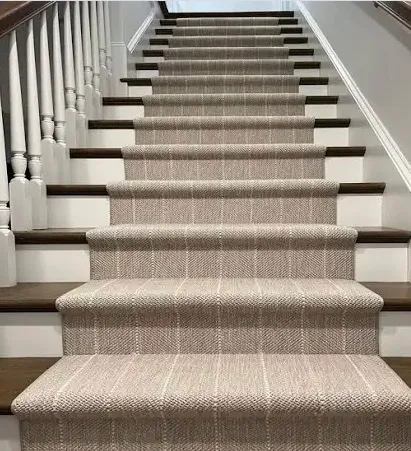
Sam: It depends on what you’re doing. A lot of decorators now, especially for stair runners, are going with a herringbone look. That’s really in right now. You see it a lot on Instagram and other social platforms.
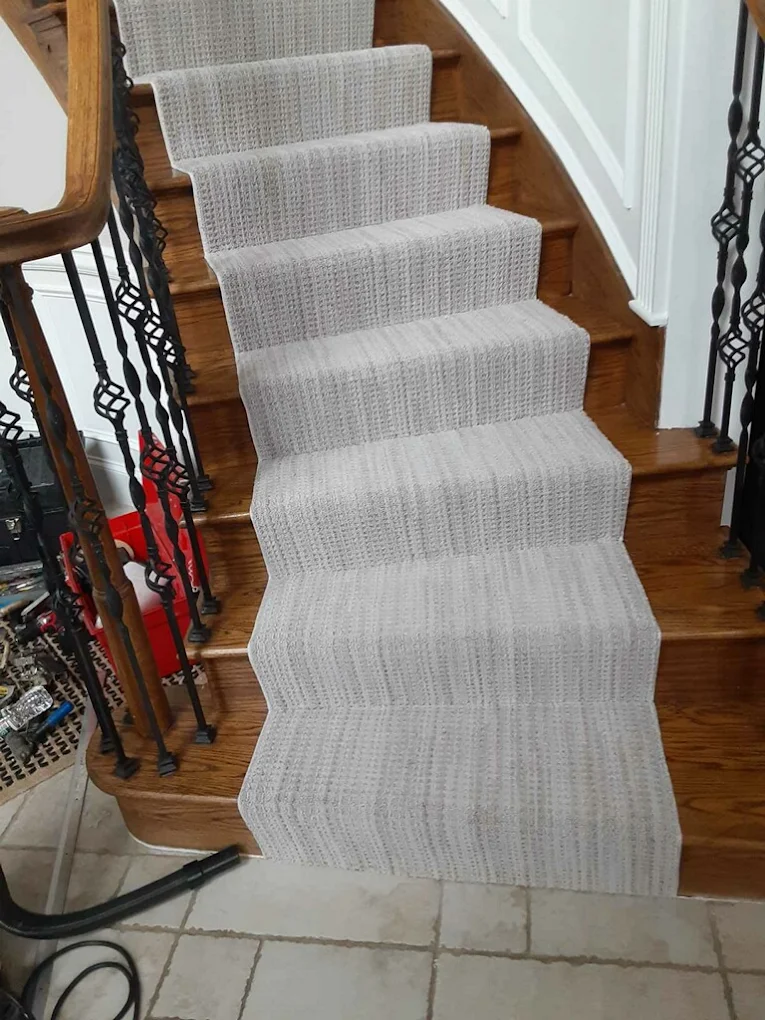
We also have a big carpet rug binding business. We stitch and finish the edges of carpets. We can bind, serge, or add fringe. We do all of that in-house with our own machines. We do a lot of custom stair runners and high-end stair runners.
Teddy: What’s your favorite type of work? Do you like doing whole houses in new construction, or do you prefer working in existing homes?
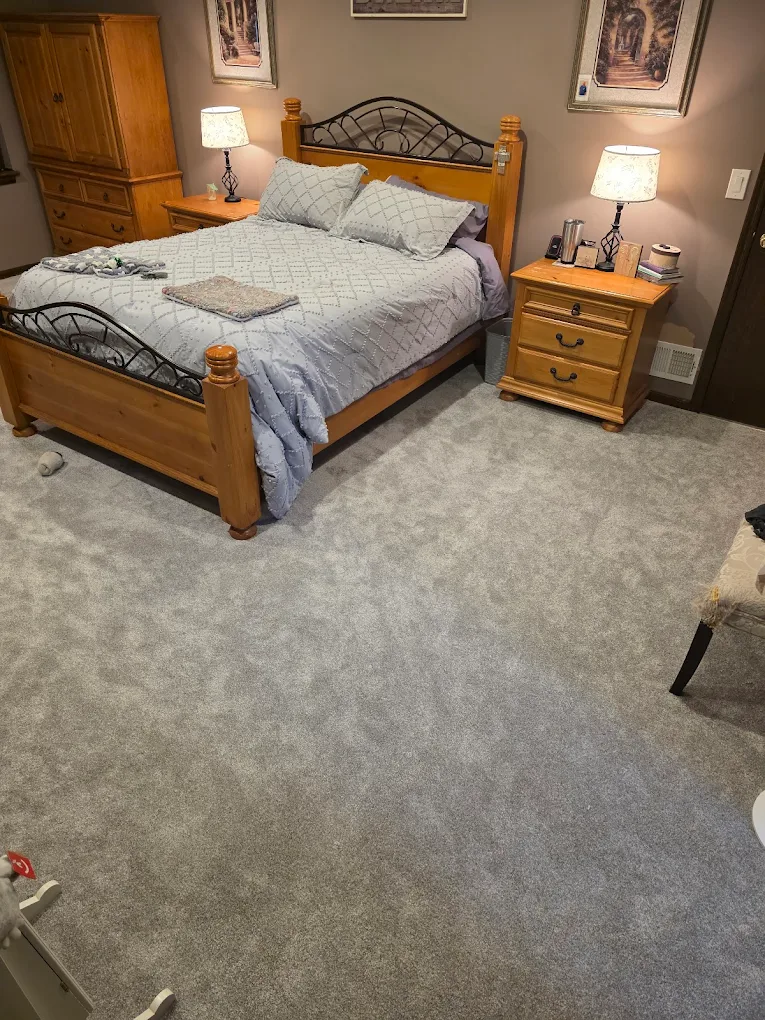
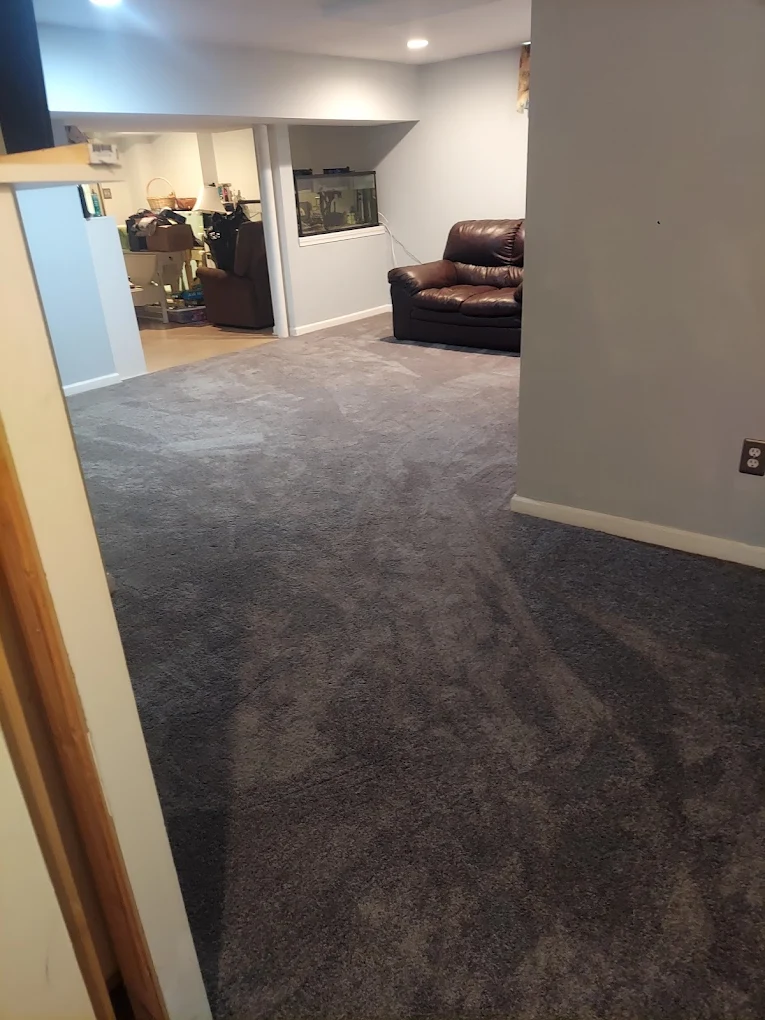
Sam: Generally, it’s a lot easier going into a new home without furniture. New construction, you’re in and out in several hours.
But the reality is most people have furniture and are living in their homes, so we have to move everything. We offer a furniture-moving service as part of what we do. My ideal customer is any homeowner looking to replace carpet or flooring — whether they have furniture or not. We’re fully equipped to handle it.
Teddy: “Sam the Carpet Man” — where did that name come from? I love it. It’s so catchy. You said earlier you weren’t always great at marketing, but clearly you’ve gotten good at it. How did you come up with “Sam the Carpet Man,” and when did that start?
Sam: It started during my adolescence. My name is Sam, and my younger brother Omar — before he passed away — actually named me “Sam the Carpet Man.” He was responsible for a lot of the jingles we created at My Way Carpet. He had a very creative side that I loved.
He helped me establish the toll-free number 877-GO-MY-WAY, and he helped write the lyrics to our jingle. My father, believe it or not, helped me come up with the name “My Way Carpet.”
So my family had a lot of creative input. They weren’t involved in the day-to-day, but they had a big impact on the branding and ideas.
Teddy: That’s awesome. It’s always cool when you have family involved. It can be tough working with family, but when it works, it’s really special. We all have those family business stories.
When people think of “Sam the Carpet Man,” what do you want them to remember?
Sam: “Wall-to-wall, Sam lays it all.”
Teddy: Nice. That’s awesome, man. What’s your website? Where can people contact you?
Sam: MyWayCarpet.com or SamTheCarpetMan.com.
Teddy: Awesome. And for everybody listening, Sam will be in the directory, so we’ll put the link below. You can connect with him there as well and check out all his reviews. You’ve got a lot of Google reviews now, right?
Sam: And they’re all real. At one point we had all five-star reviews — almost every single one. We did a job for a friend of mine, Alexander Mazi, and he gave me a four-star review.
I followed up with him and said, “Hey Alex, were you happy with the job?” He said, “Yeah, I was.” I said, “Just curious, you don’t have to change anything, but why four stars?”
He said, “Sam, your reviews look fake. They’re all five stars. No one’s going to believe you.”
He was right. Whenever I’d go to a customer’s house, they’d joke and say, “How many of your friends and cousins wrote those reviews?” I used to hear that a lot.
After Alex gave us a four-star, it dropped our average to a 4.9 — and it actually looked more believable. But they are real. Friends have asked, “Do you want me to write you a review?” and I always say, “Only if you’re writing about my character or if I did a job for you. Don’t just write a fake review.”
It has to be genuine. The last thing I want is to tell people our reviews are real and know in my conscience that they’re not.
Teddy: You’ve got a lot now, right? How many reviews are you up to?
Sam: Over 540.
Teddy: Wow. God bless you, man. That’s awesome.
Sam: Thank you.
Teddy: You’ve been doing this a long time. Google actually reached out to you, right?
Sam: Yeah. Google drove to our office — which is unheard of. I am Google LSA verified, and some Google executives have ordered carpet through us. One of them told me that when he writes a review, it holds a lot of weight because he works at Google and has firsthand experience with the company. That means a lot.
We’ve also done some big commercial jobs. Just before a leg accident put me in a wheelchair for five years, I landed a national account with LA Fitness. We had first right of refusal for every LA Fitness in the country. At the time there were about 704 of them.
I only took the locations from Maine to Florida. We redid every LA Fitness from Maine to Florida in about a year. I’d fly my guys out, and we’d get it done.
We were the fastest installation crew in the country for LA Fitness. They gave contractors six days to finish, and they would usually finish on day seven around noon. We’d finish in two and a half days sometimes.
Teddy: Really?
Sam: Yeah. At first, it created a slight problem because they tried to renegotiate the contract since we were finishing so quickly. I said, “No. Time is of the essence. Time is money. We’re in and out with almost no issues. And if there are issues, we’re there immediately to fix them.”
Once in Florida, there was an issue. I flew out on the next flight, and we had everything rectified within two days.
They wanted us to go to California too, but I graciously declined. We’ve also had accounts with Nike, Gap, and we recently did IKEA in Paramus and Elizabeth.
Teddy: So you’ve done some big jobs. It’s not just homeowners.
Sam: Right. Our business is about 50/50 — 50% commercial, 50% residential. We love both. We also work with a lot of decorators, designers, coaches, and stagers — people who stage homes.
Teddy: Your quick turnarounds probably help a lot with staging jobs.
Sam: Definitely. Sometimes stagers will call and ask if I have anything in stock for a nice fancy runner to give the entryway a little “oomph.” When you walk into a home and see a nice elegant runner, it sets the tone. We do that, and we have quick turnaround times for those projects.
Teddy: That’s cool, man. I’ll give you the last word. Just to end it, tell the audience a little something about yourself or the business — whatever you want to leave them with.
Sam: I’m Sam the Carpet Man, owner of My Way Carpet, Floors, and More. We wear our hearts on our sleeves, and we’re here to serve you. If you’re ever in the market for carpet or flooring, please look me up. I’m one call away: 877-GO-MY-WAY.
Teddy: Cool, man. This has been a lot of fun. I think we got a lot of good content. I’m looking forward to having you as part of the network and continuing the relationship, both business and personal.
Sam: I enjoyed it. Thank you for having me.
Teddy: Awesome, man. Thanks.
 Skip to content