Basement Waterproofing & Mold Remediation in New Jersey
An Interview with Doug Lynch of A1 Basement Solutions (Garwood, NJ)
Host: Teddy Slack, Jersey Home Pro Podcast
Guest: Doug Lynch, Owner of A1 Basement Solutions, Garwood, New Jersey
Full Interview Transcript
Teddy: All right. What’s going on, Doug? Welcome to Jersey Home Pro.
Doug: Hey, thanks for having me. Glad to be on.
Teddy: Glad to get you on, man. We’re looking to get your story out there so everyone else can hear it.
A1 Basement Solutions out of Garwood, New Jersey, right?
Doug: Yes.
Teddy: Before we dive into the business, A1 Basement Solutions, let’s talk about Doug Lynch. Tell the listeners who you are, how you got into the industry — even go back as far as being a kid. When did you start working? Let’s talk about that.
Doug’s Background & How He Got Into Waterproofing
Doug: Let’s go back a ways. I owned a taxi cab company in Edison, New Jersey — Alpha Cab, $30 to Newark Airport.
I sold that business in the early 2000s and took some time off, went on vacation. My background was in sales, and that started way back when I was in the Cub Scouts. I remember selling vegetable seeds instead of candy. That did two things for me: it started my love of gardening, and it got me into selling. I planted some carrots that year from seeds I didn’t sell, and both of those things got implanted in my brain when I was maybe seven or eight years old.
Back to the cab company: I sold the company in the early 2000s, went on vacation, came back and said, “Okay, now what am I going to do?”
I looked in the newspaper — because there were still newspapers back then — and I found a sales job ad that said “Closers Wanted.” So I called up and said, “Hey, I’m Doug the closer. When do I start?”
I went up to Newark for an interview and it was a company that did basement waterproofing. I worked for them for quite a while until the housing crash in 2007–2008.
In 2008 I was a commission salesperson for that company and I got no commissions, no paychecks for three months in a row. It was horrible. The guy who owned the company was a bit of an ass. I didn’t care for him personally.
One day I was brushing my teeth and thought, “Why am I working for that idiot? I could work for this idiot in the mirror instead and make no paychecks.”
So I started out on my own. Zero customers, but huge potential. I had nothing to start with.
At first I was selling Easy Breathe ventilation systems. I figured I’d just sell three a week, had the whole thing mapped out financially and life would be good. The problem was getting the leads.
Then a magic thing happened: there was a two-day soaking rain.
How A1 Basement Solutions Started
Doug: One of the things I didn’t like about the guy I worked for is he wouldn’t provide business cards. He said, “You’re a 1099 guy, provide your own cards.” So I did — but on my cards I put my name, his company name, and my phone number, not his.
After that two-day soaking rain, my phone blew up. I’d been working for that company for years, made thousands of contacts, helped hundreds of people keep their basements dry, and they called me because of the relationships they had with me.
So I pivoted. I got someone to subcontract the basement waterproofing work, and I was no longer just in the ventilation business — I was back in the basement waterproofing business.
That was in 2009.
Teddy: 2009 — that’s exactly the year I started my first tank business after I left my family business. Everyone said I was crazy because the market was going down the tubes, but it’s all about what you put into it.
Was it hard to find a subcontractor to get it going?
Doug: No. I knew of a guy — another basement waterproofing contractor. Being in the business, you hear about others because homeowners get multiple estimates. He had a decent reputation for treating people well and doing good work that resulted in dry basements.
I called him, told him my story, met him in North Jersey the next morning at 6:00 AM, and we had a handshake deal that lasted for years. He was doing work for me the following week.
Growing the Business & Services (French Drains, Sump Pumps, Mold Work)
Teddy: So that was 2009. Take me through growing the business. You’ve got a decent amount of services — not just waterproofing, you’re doing mold work as well. Want to dive into that?
Doug: Sure. We hired the company in North Jersey to do French drains and sump pumps for us — basically basement waterproofing. French drains and sump pumps are synonymous with interior waterproofing.
Here’s what that is:
-
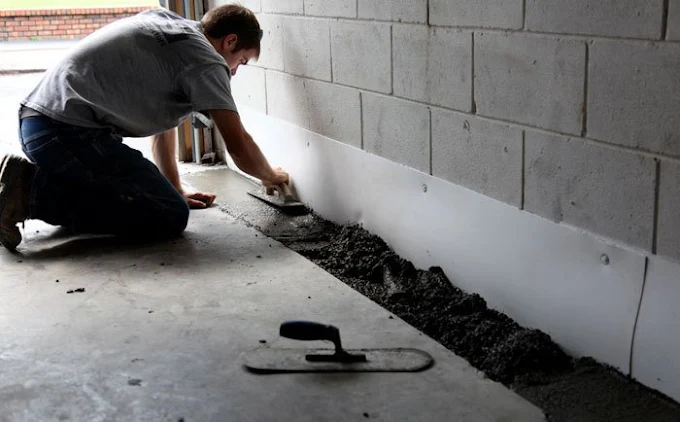
We cut a trench in the interior of the basement, 12 inches wide and 12 inches deep below the floor level.
-
Holes are drilled in the walls to allow water to drain out.
-
A few inches of stone go in.
-
A big pipe carries the water to the sump pit so the sump pump can eject it from the building.
-
The trench is covered back with stone.
-
A water diverter called “poly drain” goes across and up the wall.
-
Then the floor is re-cemented closed.
I hired the subcontractor to do that, and we did everything else. I had two guys working for me doing all the prep work: moving washer/dryers, moving customer belongings, covering everything with plastic, installing ventilation systems, installing battery backup sump pumps to go with the primary pumps — all of that.
That went on for years until my guys had to be laid off because we had no work. Around November, weeks before Christmas, I had to lay them off. Horrible feeling — no work, no money to pay them that time of year.
Then I looked at the year-end financials and how much I’d paid the subcontractor and said, “We need to start doing all the work ourselves.”
So we did — and just grew from there.
Learning to Do Mold Remediation the Right Way
Teddy: Let’s talk about mold. Not a lot of guys offer that, and some that do don’t always do it the right way. You want to talk about that?
Doug: Yeah. Honestly, we were those guys at first. We thought we knew what we were doing with mold remediation. We were wrong — and got proved wrong.
We used to offer mold conditioning/cleanup at no charge along with a basement waterproofing job. We’d get a nice waterproofing project and throw in the “mold cleanup” for free.
One customer in Colonia had a mold issue and hired a lab to come in after we were done. The lab found the mold was still present.
I talked to the lab guy. He told us, “You need to do this and this.” We went back, did what he said — and the mold was still there.
So we hired a professional lab company to come in and teach us how to do mold remediation properly.
Since then:
-
We joined the Indoor Air Quality Association of America
-
We obtained mold certification (there’s no state requirement, but we wanted to know we were doing it right)
We had to satisfy ourselves that we truly knew what we were doing because we were telling people we were killing the mold — and we weren’t. I felt terrible about that. We were doing the best we knew at the time, but it wasn’t enough.
Now we follow a full mold remediation protocol, similar to lead abatement or asbestos removal:
-
Section off the contaminated area
-
Seal the whole room
-
Put it under negative pressure to avoid cross-contamination of mold spores
-
Remove materials under very specific procedures
-
Use proper PPE and treat mold like the hazmat it is
We still have a mold spray that we offer for free as a minor treatment, but real remediation is a paid service with a full protocol. That’s been our standard for about the last ten years.
There are over 10,000 types of mold identified on earth, and every single one has the potential to be harmful or even fatal to someone who’s allergic to that specific type. Mold belongs in the forest — not inside the house.
Worst Mold Cases Doug Has Seen
Teddy: What’s the worst case you’ve seen so far?
Doug: We had an elderly couple in Piscataway about five or six years ago. It was summertime. I knocked on the door; they still had the storm door up instead of screens.
When I opened the storm door, the smell of mold hit me in the face. I let the door close and walked back to my car to get a mask. The husband called out, “Hey, I’m home!” They were living in that house, in that air.
Downstairs, the basement had been wet for years. There was standing water, wet cardboard everywhere, and mold growth all over. One active piece of mold can put out millions of spores a day. The place was completely contaminated. That was the worst I’ve ever seen.
We’ve had other cases where people were living in horrible conditions and had no idea how bad it was.
Why Mold and Water Go Together
Teddy: In a project like that, is the reason the mold is there basically because there’s water intrusion?
Doug: Exactly. Mold is alive. Just like us, it needs food and water.
-
The food is dead organic matter: wood floor joists, subfloor, drywall, cardboard boxes, etc.
-
When you introduce water, mold can thrive.
So when clients call us, we’re usually dealing with both: water problems and mold problems.
What a Typical Waterproofing Project Looks Like
Teddy: What does a typical waterproofing project look like for you? Is it a little puddle in the corner of the basement, or three feet of water?
Doug: It usually starts as a puddle. Nobody typically gets a full flood the first time. The foundation gives you warning shots across the bow before the big attack.
A lot of houses around here were built in the 40s, 50s, and 60s. When the foundation was built, they coated the outside with tar. Tar is excellent waterproofing, but it lasts about 30 years. It’s like roofing material — not permanent, it degrades.
After 30–40 years, 80% of that tar is gone. When there’s a lot of rain over a short period of time, water accumulates in the ground and lays against the house. It soaks into the concrete foundation, fills up the hollow blocks, and leaks into the basement.
So it starts with a puddle. Hopefully that’s when people call us. If not, next time the puddle is bigger, and eventually one day you’ve got six inches of water on the floor. That’s when you start losing major things like your boiler, hot water heater, and your belongings.
Interior vs Exterior Waterproofing & Guarantees
Teddy: When you’re doing waterproofing, is it all interior work, or do you do exterior work as well?
Doug: We do exterior as well, but with exterior waterproofing all we’re really doing is re-coating the wall. We don’t use tar anymore; we use polymers and other materials, and it’s guaranteed forever — but it’s only guaranteed for water coming through the wall.
When the water table rises around the house, you can get water from underneath and from the sides — floor and walls.
When we do an interior French drain, we guarantee both:
If we just do the exterior wall, all we can guarantee is that water won’t come through that wall.
Teddy: That’s good to know. People definitely ask about guarantees because it’s not a small job. Same with roofs: when you do a roof, you do the whole roof. People sometimes say, “It just leaks here, can you patch this wall or that wall?” It doesn’t work that way.
Doug: Exactly. It’s the same with basements. Just because it’s leaking on one wall today doesn’t mean another wall won’t leak next time. Our approach is:
We do it once, we do it right, and we guarantee it forever.
We won’t just come in and do “the fourth wall” after three other companies did the first three. We do the entire basement so we can stand behind our work.
How Hard the Work Is & Doug’s Crew
Teddy: It’s not an easy job, right? Lot of manual labor.
Doug: Very much so. It’s heavy work. We use jackhammers to open the concrete, but then it’s all hand work — we use nylon bags to haul the material out, about 40 pounds each.
The waterproofing crew has been the same guys for years. They work together every day. All they do is waterproofing. They’re like five fingers on a hand — it’s like watching a symphony when they’re loading the dump truck.
We bring in sand and stone on the truck, offload that, then load the excavated material to haul away. At the end of the day the site is cleaned up.
Most jobs up to about 100 feet of drainage within 10 miles of Garwood are one-day jobs. Bigger jobs can be two days or more, but we charge per foot — same price list, regardless of how many days it takes.
Fixed Pricing & Never Changing Contracts
Teddy: In some industries there are unknowns that change the price later — like sheathing on a roof or contaminated soil underground. Is there anything like that in waterproofing?
Doug: I can’t speak for the whole industry, but I can speak for our company:
We have never changed a contract. Not once in 16 years.
Sometimes we get more work than expected — thicker concrete, rebar, etc. A floor we think is 4 inches turns out to be 8 inches with rebar, and a one-day job turns into three days. That’s on us.
A contract is a legal binding document in our opinion, and we stick to it 100%.
We use a price list per foot. We don’t vary. We don’t give discounts. People ask, “Can you make the price smaller?” and I say, “Can you make the basement smaller?” It’s like McDonald’s — 20 hamburgers cost the same as one hamburger times 20.
What Homeowners Should Look for in a Waterproofing Company
Teddy: That alone would make me hire you — knowing there aren’t going to be surprises. What are some issues homeowners should look out for when hiring a waterproofing company?
Doug: With any company — not just waterproofers — I suggest homeowners:
-
Read Google reviews.
-
Look specifically for how the company handles guarantee work.
We have over 320 five-star reviews, and I don’t have that many friends and relatives. A lot of them mention how we stand behind our guarantee.
If something goes wrong 6 months, 18 months, 5 years later, we come back and correct it at no charge. We do it once, do it right, guarantee it forever, and stand behind it.
You want to know the company will be responsive and come back if there’s a problem.
Service Area in New Jersey
Teddy: You’re based out of Garwood. What areas of New Jersey do you cover?
Doug: We cover all of central and northern New Jersey — from Monmouth County up to Bergen, Passaic, and Sussex. We sort of avoid Hudson County because there’s just no parking. We don’t run Google Ads there, but if someone calls from Hudson County, of course we’re receptive.
Stone Foundations & Radon / Asbestos Encapsulation
Teddy: Some older homes have stone foundations. How does that work?
Doug: With stone foundations, the water comes through between the stones. Instead of drilling weep holes in block, we encapsulate the entire wall with a 90-mil plastic — the same thing we use for crawl space encapsulation.
We overlap and tape it so any water that comes through the wall is captured and brought down into the French drain. We do something similar in houses with asbestos — everything must be sealed so there are no openings.
We also use encapsulation to help keep radon underground where it can be remediated.
Fixing Mistakes & Changing Company Policy (Radon Houses)
Teddy: Give me a scenario where a customer had an issue and how you rectified it, just to give listeners insight into how you handle problems.
Doug: Perfect segue. Our radon-house policy came directly from a situation like that.
In the past, we didn’t encapsulate the walls on radon houses. We had the drain board coming up from the floor and we’d seal it with silicone. Normally, water trickles down the wall, goes behind the drain board, and into the French drain.
On radon houses, because we sealed that gap, the water couldn’t get behind the board — it bounced off and puddled into the basement.
We had two jobs like that in one summer. They were jobs we’d done years earlier; customers were happy until that happened.
We went back and corrected both at no charge because we stand behind our work. Then we changed our company policy:
-
Our agreement now has a “Radon house: yes or no?” checkbox.
-
If it’s a radon house, it must get wall encapsulation as part of the French drain system. It costs more, but it’s the right way to do the job.
We learned, we pivoted, and we improved our process. Same as with mold — we didn’t know we were making a mistake until we did, and then we fixed it.
Doug’s “Old-Fashioned Contractor” Code
Teddy: I’ve learned a lot about waterproofing. Is there anything you’d like to add for listeners to know about you or A1 Basement Solutions?
Doug: Yeah. I tell people we’re old-fashioned contractors. They ask what that means and I say:
-
We show up on time.
-
We do everything we say we’re going to do.
-
We work at the customer’s home on consecutive workdays until the job is finished — we don’t disappear for three days.
-
We clean up very well when we’re done.
-
And we guarantee the work forever.
It’s a simple code, but it’s a code we live by and it’s served us well.
Teddy: That’s exactly why we want to give you the spotlight. There are a lot of big, private-equity-backed companies that can’t provide that level of customer service or come back at no charge to fix things.
We want to highlight local New Jersey companies like yours that still operate that way.
Local Restaurant Recommendation (Westfield, NJ)
Teddy: Last question — a fun one. Give us a restaurant recommendation. You’re a local guy. You live in Westfield, right?
Doug: I live in Westfield.
Teddy: So give us a restaurant recommendation, either Garwood or anywhere in Jersey. What restaurant would you recommend?
Doug: I had dinner on Tuesday night at The Adams Tavern on Elm Street in Westfield. Fantastic meal. I had a nice cocktail and a pork chop. The pork chop came with sauce on it — usually I’d ask for the sauce on the side, but the sauce was amazing, the pork chop was amazing, the whole meal was great.
Teddy: That’s awesome. Awesome.
How to Contact A1 Basement Solutions
Teddy: Doug, I appreciate you coming on. Tell the listeners where they can contact you.
Doug: Sure. Our motto at A1 Basement Solutions is:
“We make basements dry and healthy forever.”
You can reach us:
Teddy: Doug, thanks for coming on.
Doug: Thanks for having me. I appreciate it.
 Skip to content