Teddy: What’s up, Carlos? Welcome to the Jersey Home Procast.
Carlos: Hey, good morning, Teddy. Thanks for having me, man. I appreciate it.
Teddy: I’m excited to have you on. You’re the first electrician on the podcast, so I’m pumped to hear your story. Tell us how you got into the electrical trade. Go back to high school and take it from there.
Carlos: It’s all because of my parents, honestly. I blame them for this. They didn’t want me staying home during the summers, so they were friends with a local electrical contractor and asked him, “Can you take my kid for the summer as a helper?”
That’s how it started. From about 15–16 years old, I spent my summers helping an electrical contractor pull wire, install devices, things like that. I never thought it would become my career.
Fast forward: I finished high school, did a couple of years of college, worked some other jobs, but I realized I didn’t like being stuck in an office or a warehouse. I liked going from place to place, dealing with different challenges every day. So I went back to the electrical field, became an apprentice, and 20 years later, here we are.
Teddy: That’s awesome. So you’ve been in the trade for about 20 years now?
Carlos: Yeah, 20 years.
Teddy: When you do something that long, you really become an expert.
Carlos: I call myself a professional. I’m a pro. I don’t know everything—there’s always more to learn in this field—but I love that. I love continuously learning.
Teddy: Yeah, in any business you’ve got to keep learning, improving, and adapting. So talk about the transition from working for someone else as an apprentice to opening your own business. How did that happen?
Carlos: I always knew I wanted my own business. I just didn’t realize how big of an impact that decision would have. I got married, my wife got pregnant with our first child, and I said, “Now is the time.”
The year my first child was born—2014—I bought a house, opened my business, and bought a work truck. It was the year of everything. I started the business because I wanted to be able to be there for my family: baseball games, doctor’s appointments, whatever came up.
The job is demanding—we get calls all the time, day and night—but having my own business lets me structure my time, run the business, and still be present for my kids. That’s how High Class Electric started.
Teddy: That’s big. Most entrepreneurs at the beginning struggle with work–life balance. I did. I was leaving at 6 AM, getting home at 6 or 7 at night. The fact that you went into it with the intention of being present for your kids is awesome.
Carlos: That was one of my main goals. Beyond money or anything else, it was about being part of my kids’ lives. Now they’re getting older, I’m getting a bit more time to focus on the business, but it started as a family decision and it’s still a family business. Hopefully one day they’ll take over—if they want to.
The first few years were tough. I was taking calls at 2 AM, getting out of bed to handle emergency calls. I was doing everything myself to get the business off the ground and to build a reputation.
Teddy: You’ve got two boys, right?
Carlos: Yeah, they’re 11 and 7.
Teddy: So still a little young to really jump in, but I’m guessing you’ve already told them they’ll be coming out with you when they’re older.
Carlos: Oh, they know. I tell them all the time: “By the time you’re 14, you’re coming with me to work, at least to shadow.” That’s how I got started and I think there’s a lot of value in that.
Teddy: Same. My dad had me on job sites when I was five or six. You learn a lot just by watching who works hard and who doesn’t. It becomes second nature. It’s a great opportunity for kids.
And honestly, trades are a huge opportunity now. College is crazy expensive. Years ago, trades were looked down on. Now everyone wants to be in home services. Private equity is buying up home service companies. There’s so much opportunity for young people—boys or girls—to come up in this industry.
I’ve got seven kids and I’d love to bring any of them into the trades if they’re interested.
Carlos: I commend you, man. Seven kids is a full house.
Teddy: We’ve got a 12-passenger bus. It’s a circus just going anywhere.
Carlos: That’s the beauty of this life, though. I love that I can take my kids to school in the morning, run my business, and see them at night.
Teddy: Let’s talk specifically about your company. It’s called High Class Electric, right?
Carlos: Yes, High Class Electric.
Teddy: I love that name. When I was naming my roofing company, I saw a brand name “Class Act,” and it reminded me of your name—same kind of feel. Where did “High Class Electric” come from?
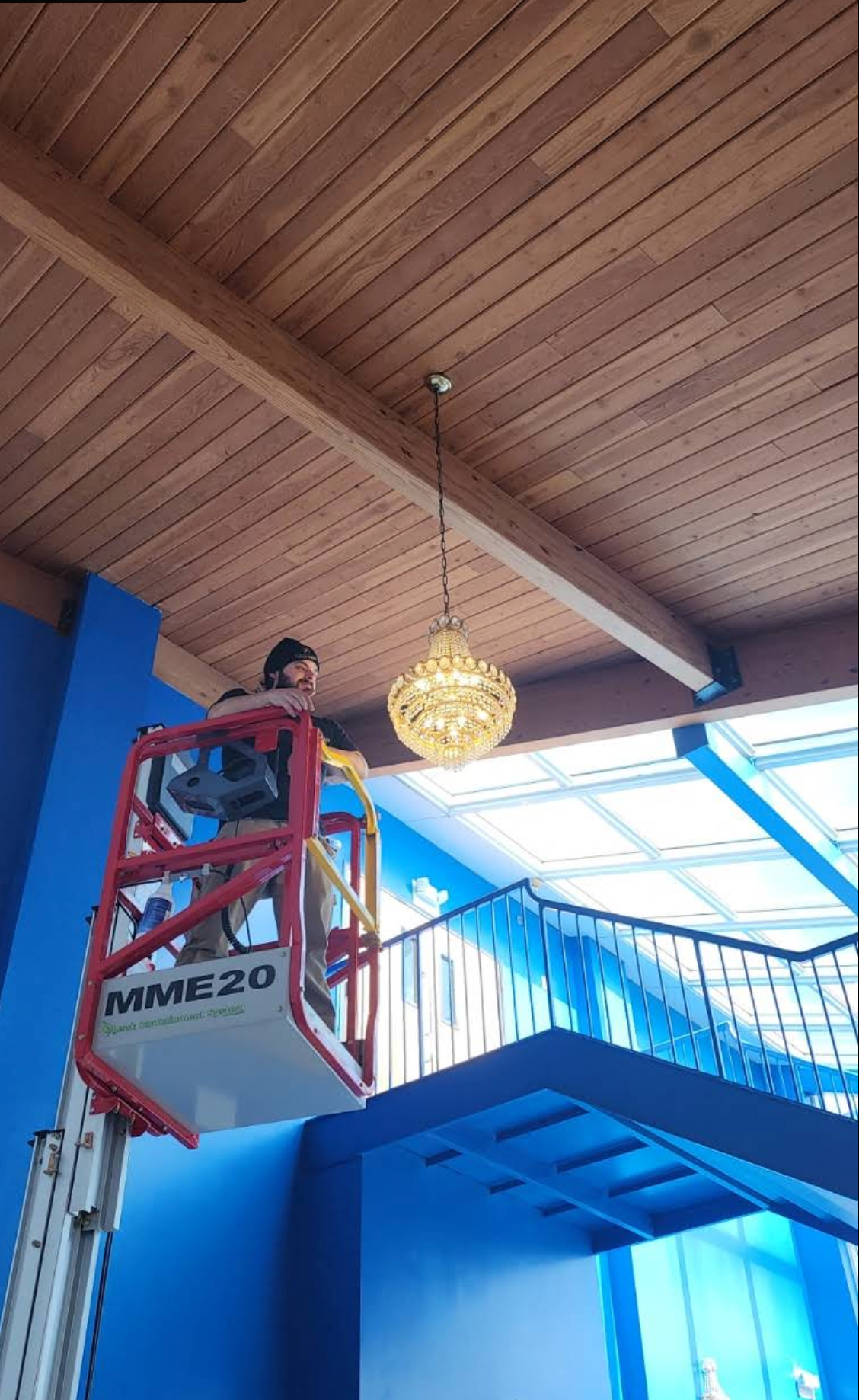
Carlos: Before I opened my business, I worked mostly on high-end properties—$2–3 million homes at the time. We did a lot of demanding, detailed lighting: huge chandeliers, custom closet lighting, under-bed lighting—things that are still considered very high-end today.
Because I knew I was good at that kind of work and could handle those projects, when I started my own business I wanted the name to reflect that level of quality. “Let’s keep it classy. Let’s keep it high class.” That’s how the name came about.
Teddy: That’s a pretty niche skill set—installing very high-end, heavy chandeliers. Not every electrician is comfortable with that.
Carlos: That’s true. I’ve got a couple of clients on the same street where we installed 500- and 400-pound chandeliers in regular single-family homes. They had other electricians before us who refused to install them because it’s not a simple job.
It’s not just, “Put a light up and you’re done.” With a 400–500 lb chandelier, there’s a big process. We bring in an architect or engineer to confirm the structure and reinforce the ceiling. We cover everything in the home, bring in proper scaffolding, and usually need a team just to carry the boxes and lift the fixture into place.
I’ve installed a 500 lb chandelier in a two-story foyer and a 400 lb chandelier in a dining room with a 10-foot ceiling. Those things are statement pieces. It’s not easy, but we get it done safely and professionally.
Teddy: Your focus is mostly residential, right?
Carlos: Yes. We focus on residential service work. We do some commercial repairs, but as a small company we try to stay mostly residential so we can give a personal touch.
I’m the one who books all the appointments, gives all the quotes, and does all the follow-ups. My clients deal directly with me. We treat our clients like family—we’ve got inside jokes, we know their stories—and we get the work done right.
Because we’re small, there’s no middleman. You call, you talk to me. That’s how we’ve built our reputation and grown High Class Electric.
Teddy: That’s exactly why we wanted you on the podcast. You’ve got a great reputation online and a great website, but more importantly you clearly care about customer service and the homeowner’s experience.
Let’s talk about the type of work you do. If you had to pick the most unique or favorite service you offer—the thing you really enjoy doing—what would that be?
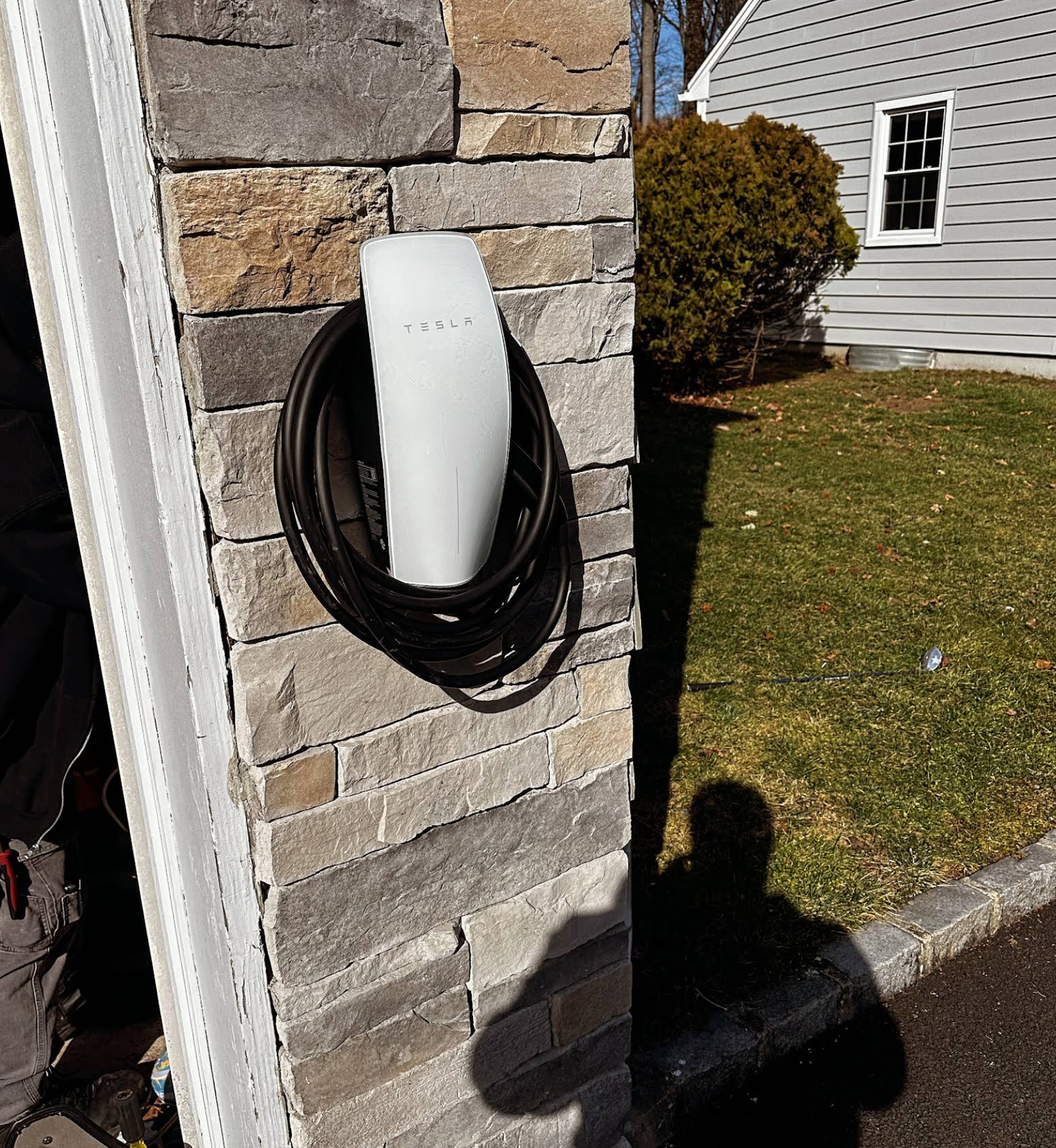
Carlos: The top services we do are EV chargers, panel upgrades, and lighting makeovers. We install a lot of EV chargers and we love those projects.
But honestly, what I personally enjoy most is problem-solving. We have a lot of older homes in New Jersey—60, 80, even 100 years old—and many of them still have the original wiring or very old systems.
I like figuring out why something isn’t working. Sometimes someone else has already been there and made a mess. I love coming in, tracking down the problem, fixing it, and seeing the look on the homeowner’s face when they say, “How did you figure that out? The last guy couldn’t.”
It becomes an ego thing in a positive way—I take pride in solving those problems. But we’ll handle anything: from changing a few outlets to rewiring a whole house.
Teddy: That’s great. A lot of bigger companies won’t even come out for smaller jobs, or they’ll charge a crazy fee just to show up. So let’s talk about protecting homeowners.
When a homeowner is hiring an electrician—whether it’s for a small job or a big one like a chandelier—what should they be looking out for? How can they protect themselves from getting taken advantage of?
Carlos: First red flag: always ask for license and insurance.
If someone can’t show you their electrical license or can’t provide a certificate of insurance (COI), that’s a huge red flag. You want a licensed, insured professional doing electrical work in your home because if something goes wrong—God forbid a fire or an injury—you need to know they’re properly covered.
Second, pay attention to how they communicate. Are they clearly explaining what they’re going to do? Do they answer your questions?
Third, look at the quote. If it’s just a one-liner like, “Wire the house” or “Fix electrical,” that’s too vague. We’re very specific and detailed in our quotes. If you’re hiring us for five outlets, the quote will say that. You know exactly what you’re paying for.
If something looks too good to be true—price is way too low, or the description is vague—they’re probably hiding something. Either they’re going to cut corners and you’ll end up calling someone like me to fix it, or they’ll hit you with a big surprise bill at the end.
Teddy: Let’s dig into the “cutting corners” part. What are some ways you see other electricians cutting corners that end up costing homeowners later?
Carlos: One of the most common things I see is putting too many outlets, lights, and devices on a single circuit to save money on breakers and materials.
Breakers are expensive, especially in newer homes. So some people try to save money by loading up one circuit with the kitchen outlets, microwave, maybe something else. Then the homeowner moves in, plugs everything in, and the breaker keeps tripping.
I come out, take readings, and realize there’s too much load on that circuit. The house might be brand new, but you already need an additional circuit. That’s cutting corners.
Another example is not using proper connectors or fittings inside junction boxes. Some people think, “Why do I need those connectors?” Well, if there’s a spark or short inside the box, the connector helps contain it so it doesn’t ignite insulation or surrounding materials.
There are always people who say, “I can do it $500 cheaper,” but if they don’t know what they’re doing or skip safety steps, that’s when you get real hazards—especially with electricity.
There are plenty of licensed electricians who do things the right way. They’ve gone through training, they maintain their license, and they stay updated with code changes to keep your home safe. That’s who you want in your house.
Teddy: Let’s talk about handymen. A lot of handymen will say, “Oh, I can wire that,” or “You don’t need a permit, I’ll just run a line to a new light.” What’s the reality there? What can a handyman legally do, and what should always be done by a licensed electrician?
Carlos: A handyman can basically do what a homeowner is allowed to do themselves. Legally, a homeowner can change their own light fixture or switch.
But once you start running new wires, adding circuits, or altering the electrical system, you need a licensed electrician. Anything wire-related—new wiring, relocating outlets, adding circuits—should be done by a licensed electrician.
And even for something like a heavy chandelier, you really want a professional who knows what they’re doing and has done it before.
In general, if you’re doing plumbing, get a licensed plumber. If you’re doing electrical, get a licensed electrician. They should also have insurance so if something isn’t right, you can call them back and they’ll make it right.
Teddy: I’ve heard horror stories: investors using unlicensed electricians, then the house catching fire, people getting hurt, or worse. And that liability falls on the landlord or homeowner because they hired someone unlicensed.
Carlos: Exactly. People don’t always realize the liability they’re taking on to save a few hundred dollars. Cheap almost always ends up expensive.
My grandfather always said, “If it’s too cheap or too good to be true, it will cost you more later.” Getting cheap labor doesn’t mean getting good work.
On the flip side, just because someone is very expensive doesn’t automatically mean they’re good either. But there’s a reason some companies charge more: they have experience, they do it right the first time, and they work efficiently.
Sometimes an “hourly rate company” is $50 cheaper per hour, but they take 10 hours instead of 3. In the end, you pay more than you would have paid with the more experienced company that finished faster and did it right.
Teddy: That’s a great point, and it ties into flat-rate pricing versus open-ended hourly pricing. For homeowners, if someone gives you an hourly rate but can’t clearly say how long the job will take, that’s an opportunity for them to run up the bill.
Does that happen a lot in your industry?
Carlos: I’ve seen it. Some contractors are known for it. They’ll tell you, “It’ll take about three hours,” but then they’re there for eight hours.
Some will literally just be up in the attic, hammering on the floor, wasting time and then saying, “Sorry, it took longer than expected,” and handing you a bill for eight hours instead of three.
That’s not what we do. For almost everything we do, we give a fixed, flat rate price. There are a few exceptions with troubleshooting, because we sometimes don’t know what we’ll find until we open things up. But for installations, it’s flat rate.
You want a light? This is the price. You want a switch? This is the price. You know what you’re paying upfront. If the job takes too long, I’m the one losing money—not you.
We also clean up. A lot of guys don’t. We treat your home like our own—that’s actually our tagline. We cover the areas we work in, do the job, then vacuum and clean everything so it looks like we were never there, except for the new lights or outlets.
Teddy: That makes a huge difference. You can get a “cheap” guy who trashes your house and disappears, or you can get a professional who respects your home.
Let’s talk about panels and old wiring, because that’s a big one. What’s the number one electrical problem homeowners ignore that ends up costing them thousands later?
Carlos: The biggest one is old electrical panels that never get addressed.
A lot of this comes up when people buy homes. The home inspector will flag the panel: “Your panel is old. You should have an electrician look at it.”
If your panel is over 30 years old, you should absolutely have it inspected by an electrician. Many times, panels that old really should be replaced with a newer, safer panel.
It’s all preventative. Better to replace a panel now than deal with a fire or major damage later.
Teddy: You told me a story off camera about a basement company working near an electrical panel that started to smoke. Can you share that?
Carlos: Sure. We had a situation where a basement waterproofing company was working near a very old electrical panel. The panel started fuming.
Thankfully, the technician on site shut off the panel and called us. When we opened it up, the inside was melting. It was about to catch fire.
We replaced the panel and made everything safe, but that whole situation could have been prevented if the panel had been replaced years earlier. The panel was at least 50 years old.
Teddy: Wow. And it had that old BX-style wiring, right?
Carlos: Yes, old BX cable with cloth insulation inside. Not as bad as knob-and-tube, but still old and brittle.
When you’re dealing with 80–100 year old homes, especially with knob-and-tube wiring or very old BX, those systems were never designed for modern power usage: microwaves, space heaters, multiple window AC units, vacuums, all running at once.
The wires are old, dried out, and not sized for today’s loads. People start tripping breakers constantly. Then someone who doesn’t know what they’re doing “solves” it by putting in a larger fuse or breaker. That’s when you get fires.
So yes, in many cases, rewiring is recommended. I get that nobody wants to hear, “You should rewire the whole house,” especially if the house is finished. It’s messy and involves cutting into walls.
What I usually recommend is planning for it in phases. When you renovate a room and open the walls, bring us in to replace that old wiring. If you want to get rid of all the knob-and-tube, we can do it, but we have to be honest: it’s going to be a lot of work and disruption.
Teddy: Do insurance companies ever send letters about old panels or wiring the way they do for roofs?
Carlos: I’m not an insurance expert, but I do know some customers who got letters about Federal Pacific panels.
Federal Pacific is one of the big problem brands. Those panels have been obsolete since the 80s and are considered a fire hazard. When we see one, we recommend replacing it.
If you’re buying an old home in New Jersey—there are tons of them—you have to treat it like buying an old used car. You’re going to need to put money into it: roof, plumbing, electrical, etc.
Teddy: For panels specifically, what should homeowners look for as warning signs that it may be time to upgrade or at least have it checked?
Carlos: First, check the brand. If it’s Federal Pacific, that’s a big red flag. There are other problem brands too, but that’s the most well-known.
Second, age. If the panel is more than 30 years old, you should have it inspected by an electrician.
Inside the panel, you can get corrosion on the breakers and bus bars. If the springs in the breakers are corroded, they may not trip when they should, which is dangerous.
The panel is the heart of your home’s electrical system. Start there. Ask: When was the last time it was inspected? Has anyone tightened the connections in the last few years?
I recommend having it checked every three years. When we go to a repeat customer’s house, we’ll often pop the panel cover off as a courtesy and make sure the screws are tight and everything looks good. Over time, wires heat up, cool down, and connections can loosen. Tightening those helps prevent issues.
Teddy: Good to know. What would you say is the biggest scam or upsell in your industry that homeowners should watch out for?
Carlos: One of the biggest is unnecessary panel upgrades.
We do a lot of panel upgrades and we enjoy that work, but not everyone needs one. If your panel was replaced five years ago and you’re not adding big new loads, you probably don’t need a new panel.
But there are companies that go out for a tripping breaker and immediately say, “Your whole panel is bad,” and try to sell a full upgrade. I’ve had homeowners call me for a second opinion and I tell them, “You don’t need a panel. You just need a new breaker,” or some other smaller repair.
Another thing is service plans that don’t really provide value. Some companies sell “maintenance plans,” then come out every year and always “find something” to replace for an extra charge. You think you’re paying for peace of mind, but you’re really just paying for them to look for more billable work, even if you don’t truly need it.
Teddy: So if a homeowner wants to protect themselves, it sounds like getting a second or even third opinion is smart—especially on big-ticket items like panel replacements.
Carlos: Absolutely. If it’s not someone you’ve used and trusted for years, or if their explanation is vague, or if the price seems outrageous—or even suspiciously cheap—get another opinion.
Even if the second quote is more expensive, pay attention to how they explain the work, why they’re doing it, and what makes them different. You want someone who can clearly explain the “why” behind their recommendations.
I’m a homeowner too. If I need a contractor in my house—HVAC, roofing, whatever—I do the same thing. I get multiple quotes unless I really trust the person.
Teddy: And a lot of your business comes from word of mouth, right?
Carlos: Yes. We love working on the same street or in the same neighborhood where we’ve already done work. If your neighbor has been using us for years and recommends us, there’s already trust built in.
It’s easy to break the ice: “How’s John doing? How’s his dog?” Then we focus on how we can help you. I’m not there to hard sell. I’m there to solve a problem.
Teddy: That’s a good segue to sales style. In home services, there are a lot of high-pressure sales tactics—“What do we need to do to make this happen today?” People get pushed into service agreements or big jobs they’re not comfortable with.
Carlos: Yeah, it can feel like buying a car. “What do I need to do to get you to sign today?”
That’s not how we operate. We don’t like high-pressure tactics. We present the options, explain the pros and cons, answer your questions, and let you decide.
Teddy: That’s exactly the kind of contractor we want in our network—no high-pressure sales, good reputation, and a focus on education and value.
Before we wrap up, tell homeowners a bit more about High Class Electric—where you’re located, what areas you serve, and how they can contact you.
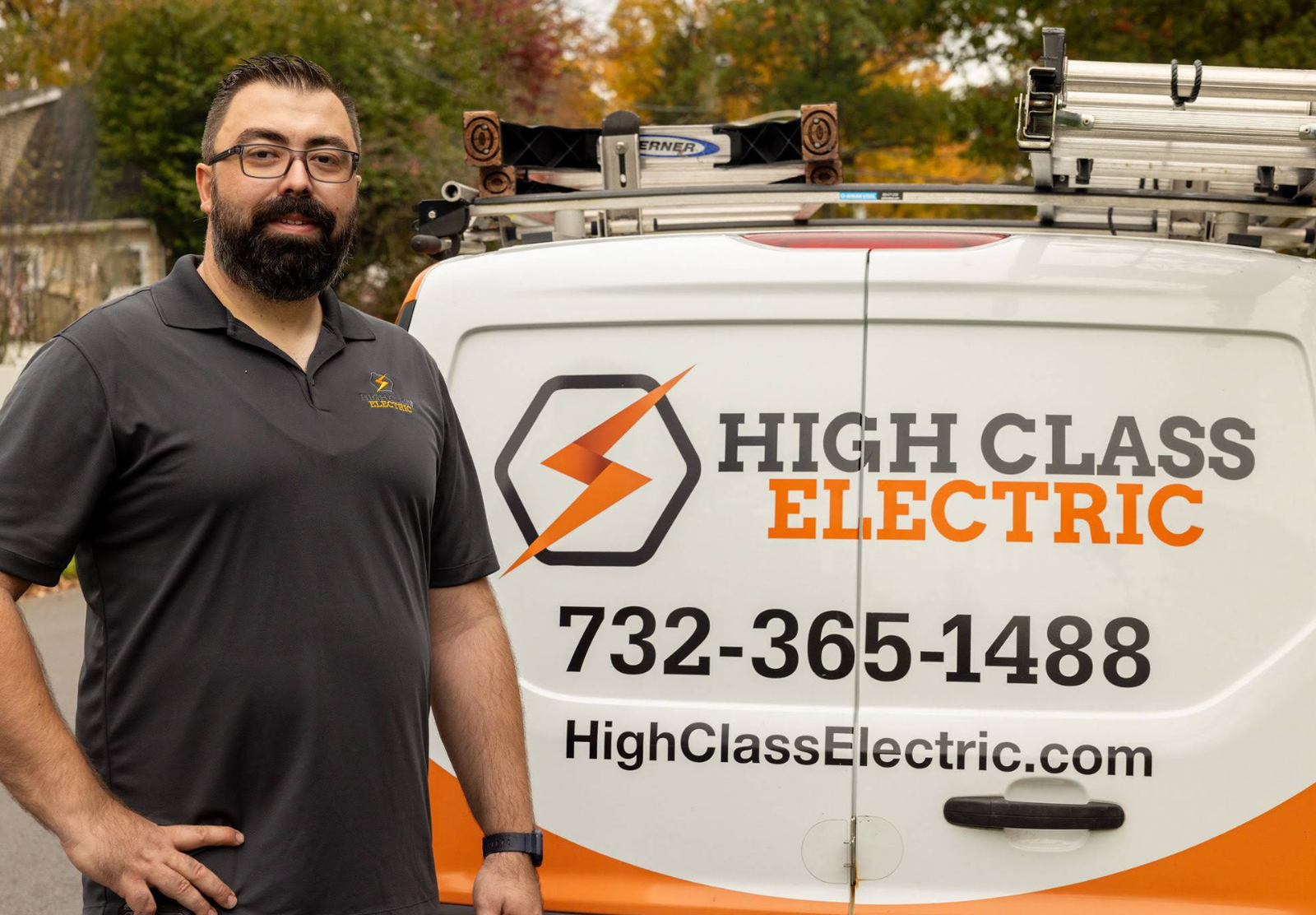
Carlos: Sure. Our company is High Class Electric. We’re based in Garwood, New Jersey.
We primarily serve Union County and surrounding areas within a reasonable radius. For larger projects, we can travel farther across New Jersey, but for typical service calls we stay in and around Union County.
You can visit our website at highclasselectric.com. You can also Google us and see our reviews—we work hard for those.
If you want to reach me directly, my phone number is 732-365-1488. That number rings my phone, and I’ll be the one answering. Any questions, feel free to call.
Teddy: And Carlos is part of our Jersey Home Pro Blackbook. You can find him at teddyroofing.com/blackbook where you’ll see his contact info, this full podcast episode, and his Google reviews as well.
I’m glad to have you as part of the network and I’m looking forward to working with you more, man.
Carlos: I appreciate it, man. I’m looking forward to it as well. Thanks for having me.
 Skip to content